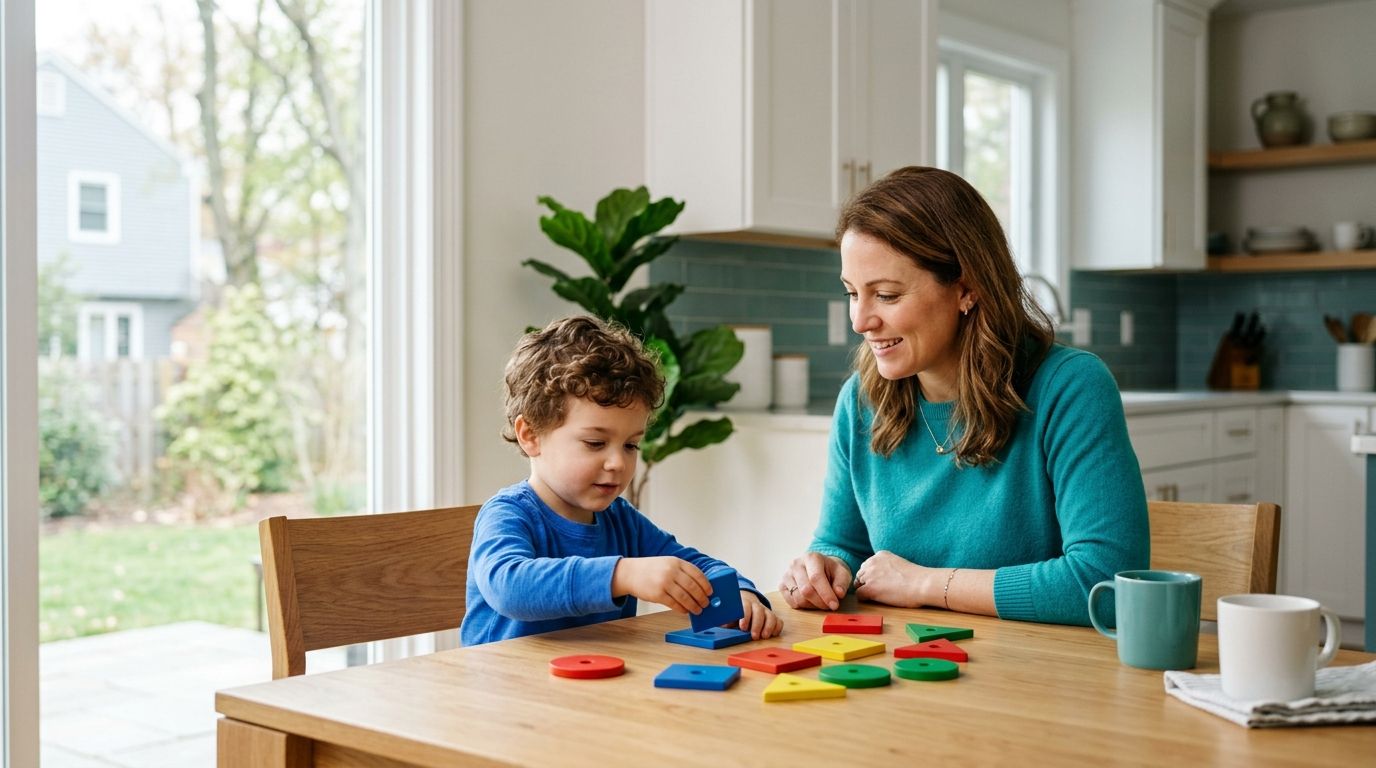
ABA therapy in New Jersey can be individualized around a child’s strengths, communication, daily routines, family priorities, and meaningful quality-of-life goals. In 2026, service recommendations may vary with clinical need, setting, treatment intensity, insurance authorization, school services, and family preferences.
- ABA therapy NJ plans can be individualized around each child’s strengths, needs, routines, and meaningful goals.
- BCBA oversight varies with clinical need, treatment intensity, payer requirements, authorization, and the treatment plan.
- Approximately 20% of direct therapy hours may be a reference in some models, not a universal requirement.
- Caregiver training can support generalization and maintenance when it fits the child and family.
- ABA Behavior Services is BCBA-D-owned and provides individualized services for New Jersey families.
Why individualized ABA matters
Applied behavior analysis is a framework for understanding learning and using that information to support meaningful skills. An ABA plan may draw on assessment results, caregiver input, direct observation, relevant records, the child’s preferences, and the settings in which support is requested.
Depending on the child and family, goals may address:
- Functional communication
- Social and play skills
- Daily living and self-care
- Independence within family and community routines
- Coping and flexibility
- Safety skills
- Participation in school or daycare
- Behaviors that affect learning, safety, access, or quality of life when clinically appropriate
A neurodiversity-affirming approach can account for the child’s communication, preferences, sensory needs, dignity, and autonomy. Goals can focus on access, participation, self-advocacy, relationships, and skills that are meaningful to the child and family rather than on making a child appear less autistic.
ABA Behavior Services is a BCBA-D-owned, clinically led provider offering individualized ABA therapy, parent and caregiver training, and advocacy for children and families in New Jersey.
How ABA therapy in New Jersey may begin
ABA Behavior Services works with families to understand each child’s strengths, needs, routines, and goals. The process generally follows these steps, with details adjusted for the child, family, insurer, and service setting.
1. Share information, priorities, and concerns
Families can describe what daily life looks like, what is going well, and where support may be useful. This may include information from home, daycare, school, community activities, medical or developmental records, and other providers.
2. Confirm coverage, authorization, and scheduling
ABA Behavior Services can help the family review insurance coverage and the documents needed to request authorization. Requirements vary by health plan and may include diagnostic records, clinical documentation, prior authorization, and periodic reauthorization.
3. Complete an individualized assessment
Each client is assigned to a Board Certified Behavior Analyst (BCBA), who completes an initial assessment with caregiver input. The assessment may include interviews, observation, record review, and direct skill assessment to identify strengths, support needs, and possible goals.
4. Develop the treatment plan together
The BCBA and caregivers collaborate on goals that reflect the child’s needs and family priorities. The plan explains what may be taught, how progress will be measured, and how services may fit the child’s settings and schedule. Goals and teaching procedures can be updated as the child’s progress and needs change.
5. Begin services and review progress
A behavior therapist works directly with the child during sessions, typically at least twice each week based on the individualized plan and authorization. The BCBA trains and supports the therapist and may supervise approximately 20% of direct therapy sessions, with the actual level based on clinical need, treatment intensity, payer requirements, and the treatment plan.
The therapist collects data during each session. The BCBA reviews those data alongside direct observation and caregiver input to evaluate whether the current approach is supporting progress and whether goals, teaching procedures, or supports should be adjusted. This ongoing measurement is a core feature of ABA, but it does not guarantee a particular outcome or timeline.
With appropriate permission, the BCBA may also coordinate with speech-language pathologists, occupational therapists, physical therapists, teachers, and other providers. Support may include caregiver training and assistance with IEP preparation or meetings when applicable, while educational decisions remain with the student’s IEP team.
Where ABA therapy can take place
Service settings may be selected by considering the child’s goals, clinical needs, family routines, authorization, availability, and permission from each setting.
| Setting | What it may support | Questions families can ask |
|---|---|---|
| In-home ABA therapy | Family routines, communication, daily living, play, and caregiver participation | Which goals may fit naturally into home routines? |
| Daycare ABA therapy | Participation, transitions, communication, play, and peer routines | What coordination and permission will the daycare require? |
| Private-school ABA therapy | Classroom participation, independence, communication, and school routines | How will private services coordinate with the school team? |
| Community-based ABA | Safety, flexibility, recreation, and use of skills in everyday places | How will support account for privacy, dignity, and the child’s comfort? |
| Center-based ABA | Focused teaching and planned practice in a structured environment | How might skills be practiced in other settings? |
| Telehealth caregiver training | Coaching, problem-solving, and support between in-person services | Is remote support appropriate for the current goals and family? |
Some children may receive support in more than one setting, while others may have a plan focused on one setting. The connection between each setting and the treatment goals can be discussed with the clinical team.
How BCBA clinical oversight is individualized
BCBA clinical oversight does not follow one universal weekly or monthly schedule. The amount, timing, and format of oversight may be individualized according to clinical need, treatment intensity, direct therapy hours, payer or authorization requirements, staffing, the treatment plan, and applicable professional or legal requirements.
Approximately 20% of direct therapy hours may be used as a general reference in some treatment models. It is not a universal requirement, and it does not by itself define an appropriate plan for every child.
Families can ask:
- Who develops and updates the treatment plan?
- How will the BCBA observe services and review data?
- What factors shape the amount and timing of oversight?
- How will the team respond when progress differs from expectations?
- How are possible goal or strategy changes discussed with the family?
- How can caregivers contact the clinical team with questions?
The responses may help families understand how oversight connects to the child’s treatment plan instead of assuming that one calendar applies to every case.
Parent and caregiver training as an individualized component
Parent and caregiver training can be an important part of ABA services. When appropriate for the child and family, it may help support generalization and maintenance of skills across people, settings, and daily routines.
Caregiver training is one component of a broader treatment plan. It does not independently determine treatment effectiveness, and differences in progress should not be attributed to caregivers without considering the child’s goals, health, learning history, service delivery, environment, treatment procedures, and other relevant factors.
Training may include:
- Understanding what a child may be communicating
- Supporting communication during familiar routines
- Practicing a skill in a natural setting
- Preparing for transitions
- Responding to safety concerns
- Adapting strategies to family culture, capacity, and priorities
The frequency, format, and content may vary. Families can ask how caregiver goals will be selected, what level of participation is realistic, and how recommendations can be adjusted when a strategy does not fit daily life.
New Jersey licensure, insurance, early intervention, and schools
New Jersey now has state licensure for behavior analysts. As of September 2026, the New Jersey State Board of Applied Behavior Analyst Examiners is accepting applications for Licensed Behavior Analyst and Licensed Assistant Behavior Analyst credentials. State licensure and certification through the Behavior Analyst Certification Board are separate credentials. Families can verify a professional’s current license status and review current requirements through the State Board because implementation details, exemptions, and payer expectations may change.
Insurance coverage also depends on the specific health plan and funding arrangement. New Jersey law includes autism-related coverage requirements for certain state-regulated plans, while NJ FamilyCare describes ABA benefits for eligible members through enrolled providers. Authorization requirements, provider networks, documentation, and covered services may differ, so families can confirm details with the insurer and provider for the current benefit year.
For children under age 3, the New Jersey Early Intervention System allows families with developmental concerns to seek assistance. NJEIS uses its own eligibility, assessment, service-coordination, and Individualized Family Service Plan processes. ABA services outside NJEIS do not automatically establish NJEIS eligibility or determine the services included in an IFSP.
School services operate through education law and the student’s educational process. The New Jersey Department of Education oversees state implementation of special education requirements, including Individualized Education Programs. A private ABA recommendation may inform discussion, but the student’s IEP team makes educational decisions through the applicable process.
These descriptions reflect authoritative New Jersey sources reviewed in September 2026. Families and providers can recheck the State Board, Department of Banking and Insurance, NJ FamilyCare, NJEIS, and Department of Education before relying on a legal, licensing, coverage, or school-services statement.
Coordinating ABA with school, daycare, and other providers
Children may also receive support from teachers, speech-language pathologists, occupational therapists, physicians, counselors, or other professionals. With appropriate permission, coordination may help teams understand the child’s needs across settings and reduce conflicting recommendations.
Teams may share relevant goals, progress summaries, communication supports, or strategies when consent and privacy rules permit. Each discipline has its own scope and decision-making process, so coordination can focus on shared understanding rather than assuming that one provider directs every service.
How progress may be discussed
Progress in ABA is individualized and cannot be guaranteed on a fixed timeline. The timing of data review, formal reports, and goal updates may depend on clinical need, the treatment plan, payer requirements, service intensity, and the type of goal.
Progress conversations may include:
- Whether the goal continues to reflect a meaningful need
- What the available data show over time
- Whether a skill appears across people and settings
- How the child appears to experience the teaching process
- What barriers may be affecting learning
- Whether teaching methods or supports may need adjustment
- Whether the current service recommendation still fits the child’s needs
Graphs, percentages, direct observation, caregiver input, and real-life examples can each contribute different information. Families can ask how the team combines those sources when discussing progress and possible changes.
Learn about individualized ABA therapy in New Jersey
Talk with ABA Behavior Services about your child’s strengths, needs, settings, and family priorities.
Questions families can ask an ABA provider
When comparing ABA therapy in New Jersey in 2026, families may want to ask:
- How are the child and caregivers included in goal selection?
- How does the team account for communication, autonomy, assent, and sensory needs?
- Which settings can the team serve, and what permissions are needed?
- How are therapists trained and supported?
- How is BCBA oversight individualized?
- How are caregiver training and collaboration tailored?
- How does the team coordinate with schools, daycares, and other clinicians?
- How will insurance requirements be explained?
- Which clinicians hold current New Jersey licenses?
- How are concerns or disagreements addressed?
The answers can help families compare how each provider approaches assessment, planning, communication, and coordination without treating one service model as the only appropriate option.
FAQ
What goals can ABA therapy address?
ABA goals may address communication, social and play skills, independence, coping, flexibility, daily living, safety, school participation, and other meaningful needs. Goal selection can be individualized with input from the child and family.
How often should a BCBA supervise ABA therapy?
There is no universal weekly or monthly frequency for BCBA oversight. The amount and timing may vary with clinical need, treatment intensity, direct therapy hours, authorization, payer requirements, staffing, and the treatment plan.
Is 20% BCBA oversight required for every child?
No universal 20% requirement applies to every treatment model or child. Approximately 20% of direct therapy hours may be used as a general reference in some models, while the individual plan may call for a different level.
Does parent training determine whether ABA works?
Parent and caregiver training can be an important, individualized component that may support generalization and maintenance. Treatment progress can be influenced by many factors and should not be attributed to one component alone.
Does New Jersey license behavior analysts in 2026?
Yes. As of September 2026, the New Jersey State Board of Applied Behavior Analyst Examiners is accepting applications for state behavior analyst licenses. Families can verify current license status and requirements through the Board.
Can ABA therapy happen at home, daycare, or school?
ABA may be provided in different settings when clinically appropriate, authorized, available, and permitted by the setting. The location can be selected in relation to the child’s goals and circumstances.
How often must ABA goals or progress reports change?
There is no single timetable that applies to every goal or report. Review timing may depend on clinical need, the treatment plan, payer requirements, service intensity, and the type of goal.
How can I learn more about ABA Behavior Services?
ABA Behavior Services is a BCBA-D-owned New Jersey provider offering individualized ABA therapy, caregiver training, and advocacy. Families can use the company’s website to review services and contact the clinical team.
One last thing
A treatment plan can be easier to evaluate when each recommendation is explained in plain language and connected to the child’s communication, independence, participation, safety, relationships, or everyday quality of life. In 2026 and beyond, families can also recheck legal, licensing, insurance, NJEIS, and school-service information with the responsible New Jersey agency because those requirements can change.